Updated: June 2026
A 5-Day Itinerary for a Luxury Dani Tribe Expedition
- Private charter flights into the remote Wamena airstrip.
- Exclusive, pre-arranged cultural ceremonies like mock battles and pig feasts.
- Accompanied by anthropologists and seasoned local guides for deep context.
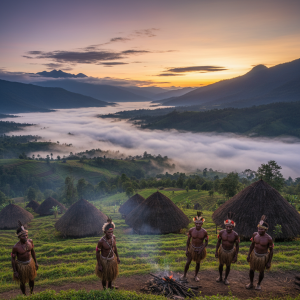
The air thins, sharp and cool against your skin, carrying the scent of damp earth and distant woodsmoke. You stand on the precipice of the Baliem Valley, a vast, emerald-green chasm carved between the jagged peaks of the Jayawijaya Mountains. Below, a patchwork of sweet potato gardens climbs the steep hillsides, a testament to centuries of unchanged agricultural tradition. This is not a postcard; it is the living, breathing world of the Dani people, and for the next five days, it is your reality. The typical barriers of travel dissolve here, replaced by a carefully orchestrated immersion that respects tradition while providing a level of access and comfort previously unimaginable in this remote corner of the world. This is the blueprint for a truly exceptional luxury Dani Tribe expedition, an experience that engages the senses and challenges the soul. (See Smithsonian on Baliem Valley for context.)
H2: Arrival and Highland Acclimatization in Wamena
Your journey into the Stone Age begins not on foot, but in the pressurized cabin of a private charter aircraft. The 45-minute flight from Jayapura’s Sentani Airport is a dramatic overture, crossing dense, impenetrable jungle before the formidable Cyclops Mountains give way to the hidden expanse of the Baliem Valley. Commercial flights are notoriously unreliable; a private charter, costing upwards of $5,000 for the leg, is the first non-negotiable element of a seamless luxury itinerary. Upon landing at Wamena’s small airstrip (elevation: 1,550 meters), you are met not by a tour bus, but by your expedition leader. For our journey it was a local guide from the valley, working with the clan elders who host the visit. “The first 24 hours are critical,” he explains over a welcome drink at the Baliem Valley Resort, the region’s most comfortable lodging. “We acclimatize, we brief, and we shed our Western preconceptions.” The resort, while not a five-star hotel in the urban sense, offers private bungalows with hot water and reliable electricity—rare and coveted luxuries here. The afternoon is spent in a detailed orientation, covering everything from Dani cosmology to the complex social currency of pigs. This is not a spectator sport; it is a participatory journey into a culture first documented by the outside world in 1938 by the explorer Richard Archbold. The groundwork laid today ensures the interactions of the coming days are meaningful and respectful, a core tenet of any authentic Danitribe cultural expedition.
H2: Day 1: The Salt Wells of Jiwika and an Audience with a Chief
After a night adjusting to the highland altitude, the expedition begins in earnest with a drive north to the village of Jiwika. The journey itself is an education, passing Dani men in traditional attire—the distinctive koteka (penis gourd)—walking alongside women carrying immense loads in noken, the versatile string bags recognized by UNESCO as an Intangible Cultural Heritage. Our first destination is the ancient salt well, a saline spring deep within a small cave. Here, we witness a process unchanged for centuries. Dani women soak banana stems in the salty water, then dry and burn them to create a mineral-rich ash, a vital source of salt in the valley. It’s a laborious, fascinating process that underscores their resourcefulness. The highlight of the day, however, is a pre-arranged visit to see the revered mummy of Chief Wimontok Mabel. Housed in a special honai (men’s hut), the smoke-preserved remains are over 250 years old. Access is a privilege, negotiated weeks in advance and involving a significant contribution to the village—a cost absorbed by the expedition fee. Holding the fragile, blackened figure, the current village chief explains his lineage, a direct line back to the man he reveres as an ancestor. This is not a museum piece; it is a tangible link to the past, a sacred artifact whose viewing is granted only through established trust. This level of intimate access is a hallmark of a well-executed luxury Dani Tribe expedition, transforming a simple visit into a profound cultural exchange.
H2: Day 2: The Spectacle of a Private Mock Battle and the Pig Feast
Today is pure theater, but with the deepest cultural significance. Our expedition has commissioned a private mock battle, a tradition that, while no longer practiced in earnest, remains a vital part of Dani identity and ceremony. We arrive in a clearing to find two groups of warriors, perhaps 40 men in total, adorned in their finest regalia: cassowary feather headdresses, boar tusk nose pieces, and bodies painted with clay and charcoal. The air crackles with energy as they perform war dances, brandishing spears and chanting rhythmically. Your guide provides a running commentary, explaining the symbolism behind each movement and the historical context of inter-clan warfare. The “battle” itself is a dynamic, exhilarating display of prowess and ritual. This is an experience arranged exclusively for our small group, a world away from the crowded, commercialized Baliem Valley Festival held each August. Following the battle, we are honored guests at a bakar batu, or pig feast. The pig is the ultimate symbol of wealth and social standing, with a large animal fetching over $1,000 USD. We witness the entire ceremony, from the ritual killing of the pig with a bow and arrow to the intricate process of cooking it in a pit with pre-heated stones, layered with sweet potatoes and ferns. The feast is a communal affair that solidifies relationships and honors guests. Sharing this meal, sitting on the earth among the Dani, is the very essence of the immersive travel that Danitribe champions. It’s a raw, powerful, and memorable day.
H2: Day 3: Trekking the Southern Valley and Wamena’s Jibama Market
Having witnessed the ceremonial heart of Dani culture, today we explore its agricultural soul. We begin a moderate 12-kilometer trek through the southern part of the valley, a landscape of astonishing beauty and human ingenuity. The trail leads us across rickety-looking but remarkably sturdy suspension bridges spanning the powerful Baliem River. Our local guide, a Dani man named Yali, points out the intricate irrigation ditches that water the endless plots of hipere, or sweet potatoes, the staple food that constitutes over 80 percent of the local diet. The terraced gardens, clinging to impossibly steep slopes, are a marvel of sustainable agriculture. The physical effort of the trek provides a visceral appreciation for the daily life of the people who call this demanding environment home. In the afternoon, we trade the tranquility of the countryside for the vibrant chaos of the Jibama Market in Wamena. It’s a sensory overload: the smell of fresh produce, the squeal of piglets for sale, and a kaleidoscope of colors from the fruits, vegetables, and textiles. This is the economic hub of the highlands, a place where tribes from across the valley converge to trade. Here, the ancient and modern collide. You can see a man in a koteka using a mobile phone, or women selling hand-woven noken next to stalls hawking cheap plastic goods. It’s a complex, evolving society, and understanding this dynamic is crucial to grasping the full picture of Dani life, a perspective that is central to the educational ethos of a high-quality cultural expedition.
H2: Day 4: Deep Dive into Village Life and the Architecture of the Honai
Today’s focus is on the intimate details of daily existence. We travel to a village compound that is not on any standard tourist circuit, a visit made possible by our guide’s personal connections. A Dani settlement is a self-contained, gender-segregated world. We are invited into the circular, thatch-roofed honai, the exclusive domain of the men. Inside, it is dark and smoky, the air thick from a central fire that smolders continuously. We sit with the village elders as they share stories—translated by our guide—about their history and beliefs. This is slow, patient travel, a far cry from a quick photo stop. We then visit the women’s huts, known as ebai, which are oblong in shape and house the women, children, and piglets. We learn about the social structure, the roles of men and women, and the upbringing of children. According to the official portal for tourism in the country, Indonesia Travel, understanding these family units is key to understanding the culture. Our expedition facilitates this by bringing not just tourists, but also valued supplies for the village—a gesture of reciprocity that ensures our presence is a positive one. This ethical approach is a critical component of a responsible luxury Dani Tribe expedition, ensuring that the tourism dollars, which can easily exceed $15,000 per person for a trip of this caliber, directly support the preservation of the culture we are here to witness.
H2: Quick FAQ About Your Dani Tribe Expedition
What is the best time of year to visit the Baliem Valley? The ideal window is during the dry season, which typically runs from April to September. This period offers clearer skies, less rain, and more favorable conditions for trekking and attending ceremonies. How physically demanding is this itinerary? Our luxury expeditions are customizable. While this itinerary includes a moderate 12-kilometer trek, we can arrange everything from gentle village walks to multi-day, strenuous treks into the southern canyons, depending on your fitness level. What are the accommodations really like? You will be staying at the best available lodging in the region, such as the Baliem Valley Resort. Expect clean, comfortable rooms with private bathrooms and hot water, but do not expect the amenities of a global five-star hotel chain. The luxury here is in the access, safety, and comfort relative to the extreme remoteness of the location. Is West Papua a safe destination for travelers? With an expert, well-connected operator, it is very safe. The key is navigating the complex local customs and logistics, which is precisely what an experienced expedition company manages on your behalf, from permits to community relations.
H2: Day 5: Departure and Lasting Impressions
The final morning begins with a quiet breakfast on the veranda of the resort, overlooking the valley as the early morning mist slowly burns off, revealing the great western wall of the mountains one last time. The past four days have been a whirlwind of sensory input and profound learning. The flight back to Jayapura feels different; the endless green canopy below is no longer an abstract wilderness but a place you now understand is home to a resilient and fascinating people. A luxury Dani Tribe expedition is not about opulence in the traditional sense. There are no infinity pools or Michelin-starred restaurants. The luxury lies in the flawless logistics that make the impossible seem effortless. It is the luxury of unparalleled access, of having an anthropologist unlock the nuances of a ceremony that would otherwise be incomprehensible. It is the luxury of safety and comfort in one of the world’s last truly wild places. Most importantly, it is the luxury of a genuine, respectful connection that leaves you with more than just photographs—it leaves you with a permanently expanded perspective of human possibility.
The Baliem Valley is not a destination you simply see; it is an experience that changes you. To begin planning your own journey into this remarkable world, explore the bespoke cultural immersions offered by the experts. We invite you to discover your own expedition with danitribe.