Updated: June 2026
How Much Does a Luxury Dani Tribe Expedition Cost in 2024?
- The cost covers charter flights, expert cultural liaisons, and private security arrangements.
- It facilitates exclusive access to authentic village life and ceremonies, not staged tourist performances.
- All-inclusive pricing includes high-end private camping, permits, and significant community contributions.
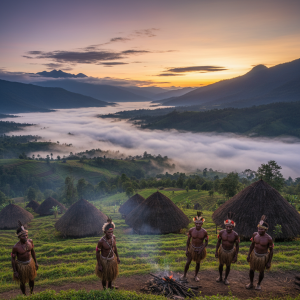
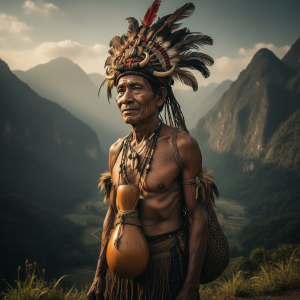
The air in the Baliem Valley is thin and cool, carrying the scent of damp earth and the woodsmoke from a hundred cooking fires. Before you, Dani men, their bodies adorned with cassowary feathers and boar tusks, begin a low, rhythmic chant. This is not a performance for the masses; it is a welcome. The world you inhabit daily—of schedules, emails, and deadlines—feels not just distant, but entirely irrelevant. To access this level of profound, authentic cultural immersion requires more than a simple plane ticket. It demands a significant investment in logistics, relationships, and respect. So, what is the real cost of a luxury Dani Tribe expedition in 2024? (See Smithsonian on Baliem Valley for context.)
Deconstructing the Price Tag: Beyond the Flight to Jayapura
The journey to the heart of Dani territory is a multi-stage logistical puzzle, and each piece carries a considerable cost. Your international flight will likely land you in Jakarta (CGK) or Bali (DPS), from which a 4 to 7-hour domestic flight is required to reach Jayapura’s Sentani Airport (DJJ), the provincial capital of Papua. This leg alone can cost between $400 and $800 round-trip. But this is merely the first step. The true gateway to the Baliem Valley is the town of Wamena (WMX), situated at an elevation of 1,600 meters. The flight from Jayapura to Wamena is the most critical and often most expensive domestic transfer. Commercial flights on airlines like Trigana Air cover the 270-kilometer distance in about 40 minutes, but they are notoriously unreliable due to unpredictable mountain weather. A last-minute cancellation can derail an entire itinerary. This is where the first major cost of a luxury expedition emerges. Top-tier operators like danitribe will often charter a private Pilatus PC-6 Porter or similar STOL (Short Takeoff and Landing) aircraft. The cost for such a charter can run from $5,000 to $10,000, but it provides schedule certainty and the ability to carry specialized equipment—a non-negotiable for a high-end experience.
The Core of the Expedition: Guides, Permits, and Village Contributions
Once in Wamena, the true value of a premium expedition becomes clear. It is not found in opulent hotels, but in the quality of human connection and access. The most significant line item in your budget, after transport, will be your guide—or more accurately, your cultural liaison. A standard tour might provide a simple translator; a luxury expedition secures an expert who has spent decades building trust with the Dani communities. These are individuals like Pak Yosua, a man who has guided ethnographic researchers and documentary film crews, and whose relationships grant access to villages far from the well-trodden tourist paths near Jiwika. Such expertise commands a premium, often $300-$500 per day. Then there are the permits. Every visitor to this region requires a Surat Jalan, or travel permit, from the local police. While the official fee is nominal, the process can be a bureaucratic quagmire. A luxury operator has this process streamlined, with contacts on the ground to secure all necessary paperwork before you even land, saving you a full day of administrative hassle in Wamena. Most importantly, a responsible luxury Dani Tribe expedition is built on a foundation of direct and substantial economic support for the host communities. This goes far beyond handing out candy or small bills. It involves a formal, pre-negotiated contribution to the village chief, ensuring your visit is a welcome collaboration. This often includes the purchase of a pig for a ceremonial feast—a vital part of Dani culture—which can cost between 7 million and 15 million Indonesian Rupiah ($500 to $1,000 USD).
Accommodation and Logistics in the Baliem Valley
While Wamena has a few basic hotels, a truly immersive experience requires venturing deep into the valley, where modern infrastructure is non-existent. This is where the logistical prowess of a luxury outfitter is paramount. Instead of relying on rustic village huts, a high-end expedition establishes a private, full-service camp. Imagine large, safari-style canvas tents with comfortable cots and clean linens, a dedicated dining tent where a private chef prepares multi-course meals from ingredients flown in from Jayapura, and even a portable hot shower system. The cost of transporting this entire operation—tents, kitchen equipment, a generator, fuel, and a full support crew of 5 to 10 people—is immense. A fleet of rugged 4×4 vehicles, typically Toyota Hiluxes, is required to navigate the challenging terrain. The daily rate for a single vehicle with an experienced driver can exceed $300, and a well-equipped expedition will always have a backup vehicle. According to Indonesia’s official tourism portal, the Baliem Valley’s infrastructure is limited, reinforcing the necessity for self-sufficient travel arrangements for any serious exploration. This mobile base of comfort and safety allows you to spend your days trekking and engaging with the culture, knowing a secure and restorative environment awaits you each evening.
The Price of Authenticity: Curated Ceremonies and Exclusive Access
Many visitors to the Baliem Valley witness a “pig festival,” but the difference between the standard tourist show and an authentic cultural exchange is vast. The former often involves multiple tour groups converging on a single village for a rushed, impersonal demonstration. A true luxury cultural expedition, by contrast, facilitates a private, intimate ceremony. Through their long-standing relationships and the significant financial contributions mentioned earlier, your operator arranges for a ceremony that is held for you and your party. The slaughter of the pig and the cooking in the earth oven (bakar batu) becomes a shared experience, a gesture of honor and friendship rather than a paid performance. This is the difference between observing and participating. This level of access extends beyond ceremonies. It means being invited by a village elder into his family’s honai—the traditional round thatch-roofed dwelling—to share stories. It means visiting communities that see fewer than 50 outsiders per year, where your presence is a genuine novelty. This exclusivity is not accidental; it is the direct result of the operator’s sustained investment in these communities over many years. As detailed in ethnographic resources like Wikipedia’s profile on the Dani people, their social structures are complex, and genuine interaction is predicated on established trust, which a first-time visitor simply cannot achieve independently.
Safety, Security, and the “Unseen” Luxuries
West Papua is one of the world’s last wild frontiers, a region of striking beauty and complex socio-political dynamics. A luxury expedition places an uncompromising premium on safety and security. This often includes the services of a discreet, local security advisor who maintains a low profile but is constantly assessing the environment and liaising with regional authorities to ensure safe passage. Furthermore, the remoteness of the Baliem Valley, which sits adjacent to the vast UNESCO World Heritage site of Lorentz National Park, means that medical facilities are extremely limited. A top-tier expedition will have a comprehensive medical plan, often with a trained paramedic or doctor on the team, and will always carry a satellite phone and a sophisticated emergency medical kit. Membership in a global evacuation service like Medjet or Global Rescue is typically included in the trip cost, providing peace of mind that, in a worst-case scenario, you can be airlifted to a modern hospital in Singapore or Darwin. These are the “unseen” luxuries: the meticulously maintained vehicles, the advanced water purification systems ensuring you never have to worry about stomach ailments, and the expert-level contingency planning that accounts for everything from flight delays to medical emergencies. These elements may not be visible in photographs, but they form the invisible scaffolding that makes a comfortable and secure journey into such a remote environment possible.
Quick FAQ on Expedition Costs
Is it possible to visit the Dani Tribe for less?
Absolutely. An independent, backpacker-style trip could be done for under $3,000. However, this entails staying in very basic guesthouses, eating local food with potential hygiene risks, navigating the complex permit system alone, and attempting to hire local guides and negotiate village access on the fly. This approach carries significantly higher personal risk and offers a fraction of the cultural access and comfort of a structured luxury expedition.
What is the best time of year to go, and does it affect cost?
The dry season, roughly from May to October, is the best time to visit for more stable weather and clearer trekking conditions. While the core costs of a custom Dani Tribe journey do not fluctuate seasonally, the availability of the best guides and charter aircraft becomes extremely limited. We advise clients to book a minimum of 9 to 12 months in advance to secure the top-tier personnel and logistics required for a seamless experience.
Does the price always include a pig ceremony?
For any reputable luxury operator, yes. The pig feast is a cornerstone of Dani social and ceremonial life. Factoring the cost of at least one pig into the expedition price is considered a fundamental sign of respect and a necessary contribution to the host community. It is the proper way to engage, and it is non-negotiable for a genuine cultural exchange.
Are tips for the local team included in the overall cost?
Gratuities are generally not included in the quoted price. While discretionary, tipping is a significant way to show appreciation for the hard work of your local crew—including the guide, drivers, chef, and porters. We recommend budgeting an additional 5-10% of your total trip cost for tips, which could amount to $500 to $1,500 per traveler, distributed among the team by your lead guide.
Ultimately, the substantial cost of a luxury Dani Tribe expedition is a direct reflection of what it takes to operate safely, comfortably, and ethically in one of the most remote and culturally sensitive regions on Earth. This is not a vacation; it is a patronage. The investment underwrites the preservation of culture through respectful engagement, provides direct economic benefit to the communities you visit, and ensures your journey is one of profound connection, not just passive observation. It is an investment in an experience that will fundamentally reshape your perspective on the world. To begin crafting your own journey into the heart of the Baliem Valley, explore the bespoke itineraries offered by danitribe.